Nucleophilic substitution is a class of chemical reactions encountered throughout organic chemistry, including reactions used in manufacturing common petrochemical and pharmaceutical products. Its underlying mechanism was discovered in the 1930s by the British chemists Edward Hughes and Christopher Ingold, who showed that an electron-rich chemical species, called a nucleophile, “attacks” and replaces an electron-poor fragment of an organic molecule, called a leaving group.
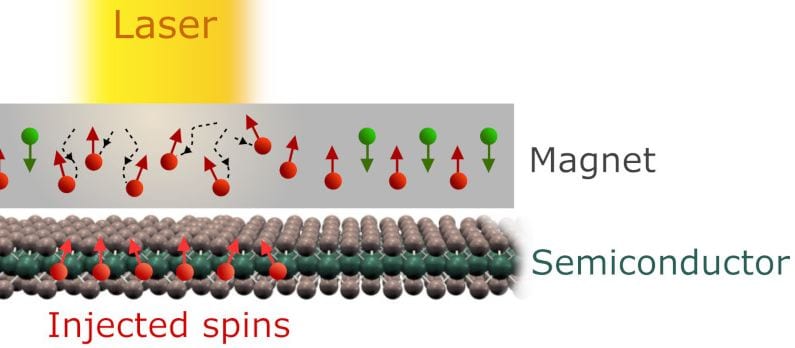
A decisive step towards ultrafast spintronics
Electronics has revolutionized the modern world, owing to continuous improvements in microprocessor technology since the 1960s. However, this process of refinement is projected to stall in the near future, due to constraints imposed by the laws of physics. Some of these bottlenecks have already taken effect: for instance, the clock rate (the rate at which transistors perform digital operations) has been unable to exceed a few gigahertz, or several operations per nanosecond, for the past twenty years, a limitation stemming from the electrical resistance of silicon.
Where on a volcano is an eruption most likely to occur?
Magma commonly moves up towards the surface by creating cracks in the crust. It flows inside of the cracks, which grow upwards as the magma applies pressure and damages surrounding rocks. These magma-filled cracks are known as dikes and they are an important form which allows magma to travel easily through the crust.
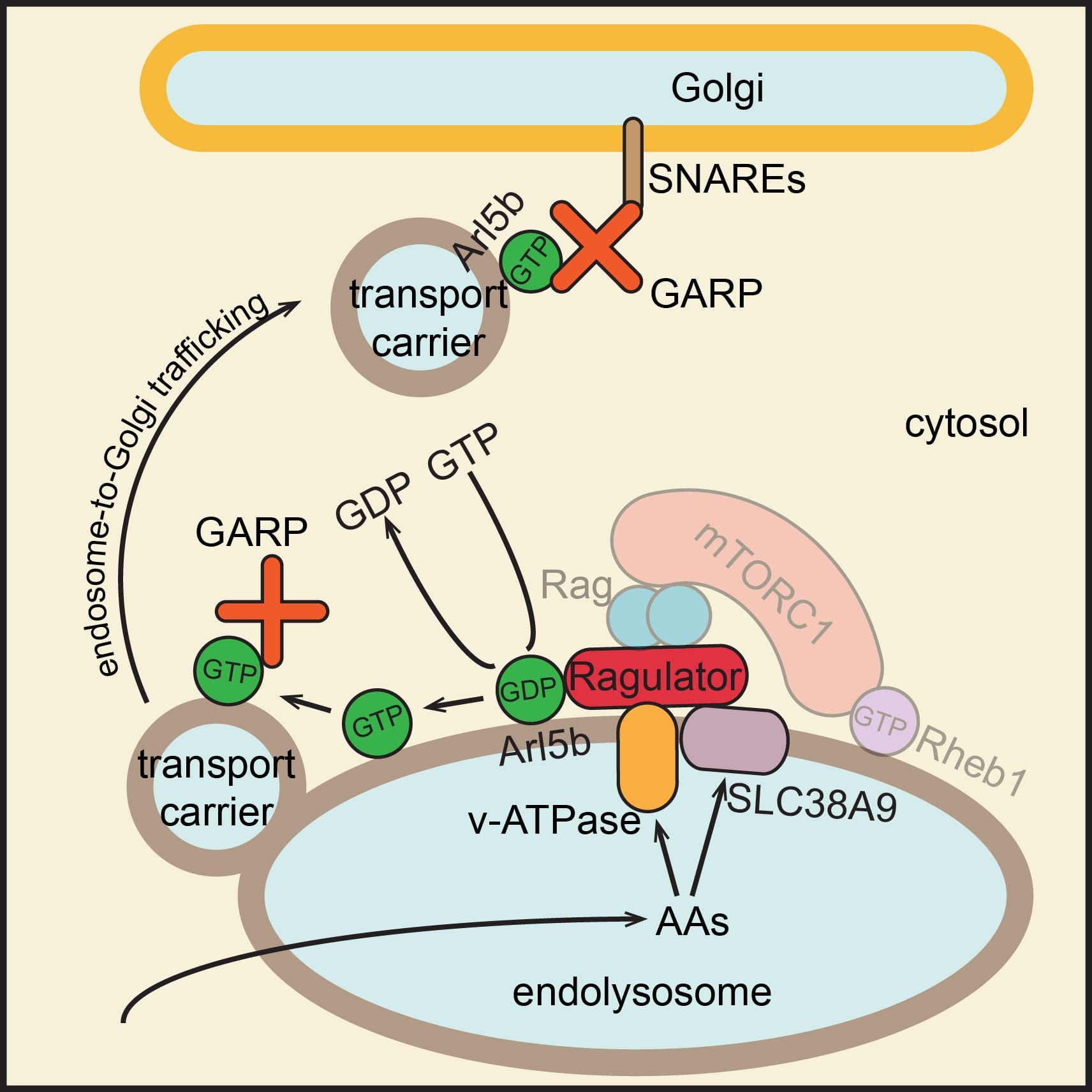
Amino acids stimulate the endosome-to-Golgi trafficking through Ragulator and small GTPase Arl5
A team led by Assistant Professor Lu Lei found that amino acids or nutrient can regulate the intracellular membrane trafficking. They elucidated the underlying molecular signaling pathway.
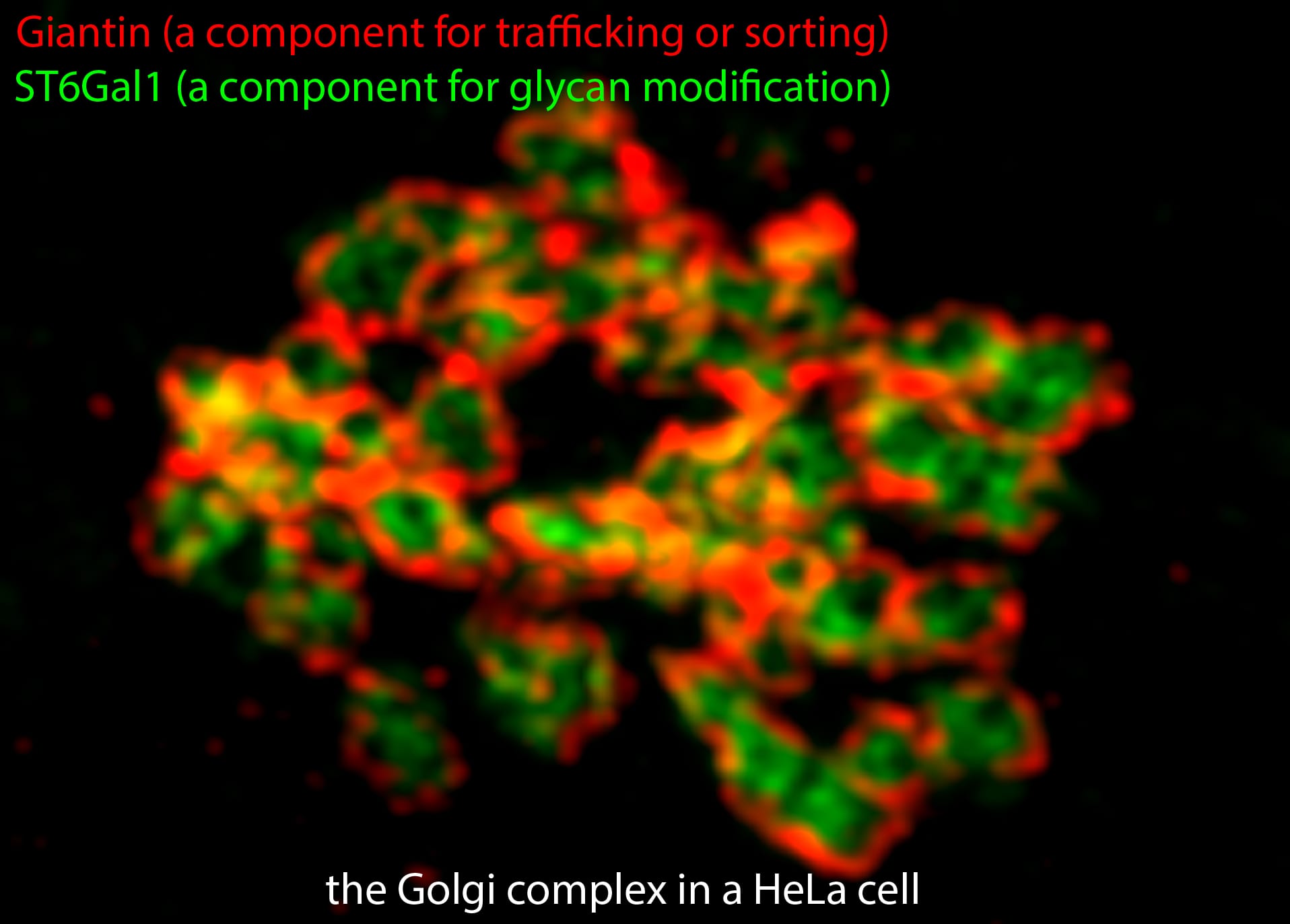
The spatial separation of processing and transport functions to the interior and periphery of the Golgi stack
A team led by Assistant Professor Lu Lei developed a method to image the Golgi. The trafficking and processing functions were found to localize to the rim and center of the Golgi stack.
Scientists realize a 3D ‘topological’ medium for EM waves
Topological insulators are exotic states of matter that physicists have been intensely studying for the past decade. Their most intriguing feature is that they can be rigorously distinguished from all other materials using a mathematical concept known as “topology”. This mathematical property grants topological insulators the ability to transport electric signals without dissipation, via special quantum states called “topological surface states”.