Meetings are a regular part of business. There are meetings with your team, meetings with your subordinates, meetings with your seniors, meetings with board members and so on. Another kind of meeting that requires different strategies and talent is the sales meeting. There is a special way to participate in business meetings with prospective clients and where you are trying to finalise a sale. So you could be a pro at meetings involving your own co-workers but not so confident at handling things outside.

Here are 5 tips to get you ready for your next sales meeting:
- Gather background information: Whenever you make a sales call, it helps to know your prospect. Do your research with the help of the Internet, your network and anything else you can get your hands on. By the time you reach the meeting, you should be familiar with the person’s company and have an idea about his or her needs and wants so that you can address them. How can your product or service create a difference for the prospective client? Be prepared.
- Set a clear objective: When you walk into a sales meeting, you should ask yourself how your time spent there will increase your sales. To avoid frustration and a waste of time, have your detailed answer ready. The objective should be specific. For example, you could decide to use the meeting to teach sales representatives about Product X. And success could be attained if 90% of the representatives reach your target sales quota within the quarter. Your job is to let everybody at the meeting know exactly what the goal is. Awareness and understanding are important.
- Ask qualifying questions: There’s a difference between pitching to a prospect and holding a sales meeting with him. The meeting is supposed to be a conversation – so you shouldn’t be the only one talking. While you intelligently steer the discussion toward his/her organisation’s needs and possible solutions, you need to make sure that it brings results. Listen well and ask good questions. For instance, you should find out who will be making the final decision on the sale.
- Prepare high-quality material: The printed tools that you carry into your sales meeting should be of high quality. That means that the business cards, brochures, stationery and estimate sheets should all be immaculate. Check for writing quality. Is the grammar and spelling all fine? Do you see anything that could read better? Fix it. How about the colours, typeface and design? Pay attention to every detail because you do not want to lose out to fellow contenders because of unattractive, uninformative materials.
- Share case histories: Stories that demonstrate the ways that you and your team have successfully met client needs should be presented at the meeting. Whether you are employing the use of a long slide presentation or talking through most of it, keep more than two case histories at hand. Never directly criticise a competitor but tactfully point out how you can do things better in the case at hand. Tell the story with a focus on your company’s strengths and the benefits your clients enjoy.
Remember, the sales meeting is where you position yourself and your company in a field full of players. So let the conversation be your best.




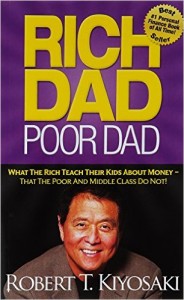 One of the bestselling books on finance, Rich Dad, Poor Dad, by Robert Kiyosaki is a must-read for anyone who dreams of building wealth and achieving financial freedom. The book recommends various means to secure financial independence: investing in real estate, starting up and owning businesses, etc. The book is based on Kiyosaki’s childhood upbringing and how the differences in the attitudes of two men (his “rich dad” and his “poor dad”) towards money, work and life, influenced his decisions in life.
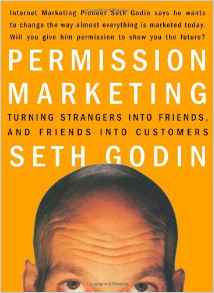 Traditional methods of marketing such as TV advertisements and online pop-up ads often involve attracting the customer’s attention away from whatever they are doing – watching television or viewing a website. Marketing guru Seth Godin reveals that the traditional ‘
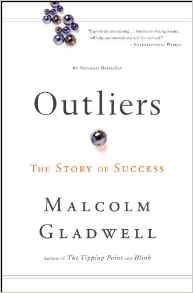 Not a typical business book, but Malcolm Gladwell’s Outliers is a must-read for anyone who wants to understand the dynamics of professional and business success. Pondering over – ‘what makes high-achievers different’, Gladwell sheds light on the fact that we pay too much attention to what successful people are like, and too little attention to where they are from – their culture, family, generation, and other factors that may have contributed to their success.
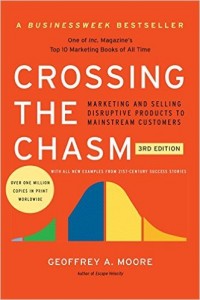 Crossing the Chasm: Marketing and Selling Disruptive Products to Mainstream Customersis a bible for marketing in high-tech industries. According to Moore, there is a gap that exists between the early adopters of high-tech products (the technology enthusiasts and visionaries) and the early majority (the pragmatists). The visionaries and pragmatists have different expectations, he adds, and this book aims to explore that set of differences and suggest techniques to successfully cross the chasm.
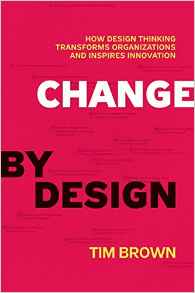 Design thinking is not just applicable to so-called creative industries or people who work in the design field. It′s a methodology that can be used by organisations to improve the quality of their service and rethink their business strategy, according to Tim Brown, the CEO of IDEO. In this book, Brown introduces a human−centric approach to problem solving that helps people and organisations get more innovative and creative.
 The Art of the Start by Guy Kawasaki is an essential guide for anyone starting anything, be it a home-based business, a multinational corporation or a community group. The book provides insights into the various aspects of starting up such as raising money from investors, hiring the right people in the team, defining the brand and building a community around it.
 In this bestselling book on business networking, master networker Keith Ferrazzi provides insights into the role of relationships in the success of a business. Ferrazzi shares the specific steps and the inner mindset he uses to connect with the thousands of colleagues, friends, and associates on his contacts list, people he has helped and those who have helped him. In the new age of digital media and online connections, Ferrazzi’s advice is even more essential for those wanting to get ahead in business.
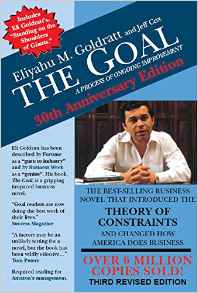 A gripping business novel by business consultant Eliyahu M. Goldratt, The Goal: A Process of Ongoing Improvement is about the Theory of Constraints, and overcoming the barriers to making money. The book features key insights on identifying and solving the problems created by constraints.
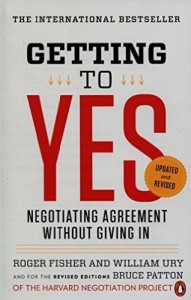 One of the best books on negotiation, Getting to Yes is based on the work of the Harvard Negotiation Project, a group that deals with all levels of negotiation and conflict resolution. The book offers proven, step-by-step techniques to arrive at mutually acceptable agreements in every kind of conflict.
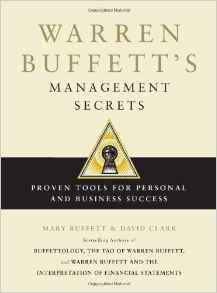 Written by Mary Buffet, after having gained insights into Warren Buffett’s philosophies for management, while being married to his son Peter for twelve years, Warren Buffet’s Management Secrets looks closely into Warren Buffett’s life and career, shedding light on his decision-making processes, leadership qualities and strategies that made him the most successful investor of the 20th century.

You must be logged in to post a comment.